Stop. Making me want to read your books.Quoting D_Davis (view post)
Dammit, I still haven't gotten to The Stars My Destination or John Dies At the End yet.


Stop. Making me want to read your books.
Dammit, I still haven't gotten to The Stars My Destination or John Dies At the End yet.


The horror western mixed with Lovecraft is certainly appealing, but I have no feelings for or against the Jewish folklore part.
Mainly because I wouldn't know Jewish folklore if it bit me on the ass.
"All right, that's too hot. Anything we can do about that heat?"
"Rick...it's a flamethrower."
Yeah, I know of the golem and dybbuk, and that's it.
Maybe you can learn about some and then develop an appreciation.
Here is a cool article about Erdelac's approach to mixing the elements of Lovcraft and Jewish folklore/religion.
Folklore and mythology is awesome. I've got a bunch of great books about Chinese and Japanese mythology and folklore, and I've gotten a lot out of them by recognizing bits and pieces used in other mediums like anime and video games. Just leaning a little bit about yokai greatly enhanced enjoyment of a lot of things.
So I'm actually having a really hard time enjoying this newest Merkabah Rider book, and not because of the fiction. The stories are still very cool and interesting.
It's because of all the typos and terrible formatting. I'm wondering if the book was even edited?
Misspelled words abound, missing punctuation marks are far too frequent, and after the first episode in the book there are no longer paragraph breaks signifying time and scene changes.
I'm not sure where to place the blame, but I'm really disappointed by it all.
Death Mask and Eulogy, by J.M. McDermott
So this was my first Kindle experience, and I loved it: both the book and reading it on the Kindle. I think I will soon find myself completely addicted to buying short little literary singles from authors, especially if authors like McDermott continue to support the format and release high quality works of fiction at affordable prices.
The best compliment I can give to Death Mask and Eulogy is that I wish it were longer, and I almost never say that about a book. DMaE is a novelette, just a tad longer than a short story, and it tells a story dealing with death, focusing on the reverence, fear, and absurdities surrounding the rituals the living perform for the dead.
McDermott's style here is more simple and threadbare than it is in Last Dragon and Never Knew Another, and it works perfectly to convey the story's world and characters. It is an interesting choice seeing as how many of the characters are artists to the extreme, but rather than drown the reader in purple prose with ornate, flowery description, McDermott chooses a minimalistic style.
I hope that McDermott is successful with these short releases, because I definitely want to read more from him.
Each layer that is peeled away reveals more and more mystery. Barker's Imajica is some kind of masterpiece. So many wonderful characters, creatures, and locales; and the bizarre, fantastic narrative couched in themes dealing with religion, sex, desire, and passion makes the entire thing impossible for me not to love.
Imajica, by Clive Barker
Imajica is one heck of a book. It is an epic and sprawling tale of fantasy, religion, sexual desire, and obsession.
Desire and obsession - these are the two driving forces behind the narrative, the catalysts which spur the characters onto their accomplishments and failures, victories and defeats, and, ultimately, their lives and deaths.
It is, however, a tad too long. Even though it remains consistently engaging, I did have trouble staying focused for the entire month it took me to read. I kept thinking about all the other books I could be reading. And this is mostly just the nature of the kind of reader I am.
Ultimately, though, Imajica is incredible satisfying.
Currently working through The Double Shadow, a collection of Clark Ashton Smith. After The Maker of Gargoyles, I needed moar, and short stories like "The Double Shadow," "The Maze of the Enchanter," and "The Devotee of Evil" are satiating my desire.
Very intrigued by the Imajica love, D. I've always had trouble enjoying long-form Barker. I've read The Damnation Game, The Thief of Always, and Abarat, and none of them compelled me on a character level. He's always felt more conceptually talented to me, and more excited about delivering his "fantastique" visions, than he has been about crafting interesting characters, and I feel like I would need that to get me through a book of Imajica's length.
I adore the Books of Blood, but they're usually just long enough to present and explain the macabre visions.

Reading Michael Moorcock's Elric of Melnibone. On page 18 his love interest Cymoril is described as having fair hair, but then 14 pages later it is described as "jet-black". C'mon editors.
I really liked the characters in Imajica. All three of the main protagonists - Gentle, Pie 'oh' Pah, and Judith - are well realized.
I do agree with you for the most part, although it doesn't bother me because I never turn to Barker for character. I turn to Barker to be wowed by his insane visions. I haven' read a lot of his long-form stuff, but I loved Weaveworld, I like The Thief of Always, and I remember liking The Great and Secret Show a lot. I'm going to read the later again this year, along with Everville.
For those of you on Goodreads, my friend Alex and I started a reading group focusing on pre-Tolkien fantasy. There are a bunch of great folks in the group, so join up if that sounds interesting to you.
http://www.goodreads.com/group/show/...olkien_Fantasy
In March we'll be reading The Worm Ouroboros, and today I'm starting Fifty-One Tales, by Lord Dunsany.
We'll also be reading A Journey to the West sometime this year.
The more I read from Lord Dunsany, the more it becomes apparent that the magical realists - Gabriel GarcÃ*a Márquez, Italo Calvino, et al. - must have worshiped at his throne. And yet he is shoved off into the ghettos of genre, while Marquez and Calvino are celebrated for their literary status. It's a disgrace.
Fifty-One Tales, by Lord Dunsany
Fifty-One Tales is a collection of vignettes, of brief little stories often folk-like in nature, containing few, if any, named characters; instead we catch glimpses of entities like Time and Nature, Fate and Fame, the architect, the poet, the artist, the hen, and the hair and the tortoise. While some are better than others, the entire collection is simply delightful.
From the very first tale, "The Assignation," Dunsany reveals his game - these stories feature a set-up, the delivery, and then a punchline. There is a formula at work here, as if Dunsany was limiting himself to a certain rigid structure, and then seeing what he could do within that framework. What he does is simple and elegant; he works magic.
Some of these tales made me laugh, others made me sad, and still others left me feeling thoughtful. "The Guest" is a morose little tale about suicide; "The Worm and the Angel" speaks of a brief conversation between the two; "The Reward" is a startling little tale of heaven and hell; and my favorite of the bunch, "The True History of the Hare and the Tortoise," is, without doubt, one of the best things I've ever read.
The more I read Dunsany, the more it becomes clear to me that the magical realists - authors like Gabriel GarcÃ*a Márquez and Pablo Neruda, along with Italo Calvino - must have worshiped at the throne of his mastery. Lord Dunsany is an author with a stunning command of the English language; he is a poet and an artist, a truly creative force.
I'm about half way through When We Were Executioners, the second installment of J.M. McDermott's Dogsland trilogy. As per usual with McDermott, it is incredible. This guy can do no wrong. This is the third thing I've read from him in as many months (the other two being short stories - Death Mask and Eulogy, and King Basilisk's Palace) and each piece has been stunning.
When We Were Executioners is not an easy read. It is reminding me a lot of a fantasy version of The Wire. It's story that is intensely focused on its characters, almost to a pointillism extreme, and the way they live their lives in a fictional city as seedy and dangerous as The Wire's depiction of Baltimore. There are cops, robbers, whores, drug runners, kingpins, soldiers, corruption, death, debauchery and disease around every corner.
Why McDermott isn't among the most popular fantasists writing today will forever be a mystery to me.
When We Were Executioners, by J.M. McDermott
Sometimes there aren't reasons for things; sometimes things just are. This is true for the characters and story depicted in J.M. McDermott's book, When We Were Executioners, and true for the book itself.
Thus far, The Dogsland Trilogy is the polar opposite of high, epic fantasy. I'm not quite sure what the opposite of epic is, but in this case the narrative is super small and extremely personal, almost to the point of it being a work of pointillism.
The Dogsland Trilogy is low fantasy, very low, and also very urban. I'm not talking about urban in the sense of a Neil Gaiman or Clive Barker urban fantasy. This isn't cute-goth, or weird alt-London, or steampunk. It's urban in the sense of it taking place in the inner-city; it's urban in the same way that The Wire is urban. It's about the lives of a few people trying to get by, it's about whores and drug dealers, cops and criminals, addicts and politicians, all trying to live their lives with the cards they were dealt, while all around them the city, their very environment, chews them up and spits them out.
And the chewing gets nasty. McDermott punctuates this book with a few scenes of extreme, grotesque violence, violence that has a point, and violence that hits hard. It is graphic and hard to read, but never gratuitous. This is not violence in the context of action, or titillation, or excitement. These depictions of violence serve to illustrate the consequences of living in a city like Dogsland.
When you get right down to it, there isn't a lot going on plot-wise. It's basically a direct continuation of the first book, Never Knew Another, almost to the point of it being the same book. Things happen, but there isn't a grand, sweeping narrative with an exciting dramatic drive keeping the pages turning. It is, rather, a very small story about people, their lives, their love, and their survival.
And so what's the point of the book? What's the point of it being a trilogy? I'm sure if you simply examined the plot of the entire thing, you could easily tell the story in a single volume, perhaps in the length of a novella; the plot is not complex, at all. But some things don't need points, or reasons. Some things just are. This book exists simply to read about and spend time with a few fictional characters, not completely unlike people you might know, save for some of them being shape-shifters and of-demons. It exists to be read, and isn't this the ultimate purpose of all fiction?
The Turtle Boy, by Kealan Patrick Burke
"I'm feeding the turtles."
A simple line of dialog, and yet one that will haunt me for ages to come. The meaning behind the line, the character uttering it, and the implications of what is in store for Timmy Quinn, the story's hero, are all wonderfully examined and illustrated in this short novella.
I've said it before, but it's worth saying again: Kealan Patrick Burke is (or should be) the next Stephen King. He's got that same simple, yet highly effective voice, and, like King, Burke knows how to turn a phrase for optimum horror effect. Burke doesn't write in the same niche voice as a Ligotti or a Cisco; he's not "underground" or "experimental," although he is still unfairly not a huge seller. I rarely hear people talking about him, and that has to change. Burke posses a unique trait - he's got a strong voice, a ton of talent, and he has his pulse on things I think the mass market would gravitate towards.
This is the second book I've read from Kealan Patrick Burke, and one thing is abundantly clear - I need to read more. And now, thanks to the Kindle and e-books, this simple task is doable. When I first discovered Burke, a few years ago, most of his fiction was completely OOP, and very expensive. "The Turtle Boy" was selling on the second-hand market for over $150, as were most of his other books. Now most of them are completely affordable and readily available.
I'm looking forward to reading the rest of the Timmy Quinn stories, including the full-length finally coming out some time this year.
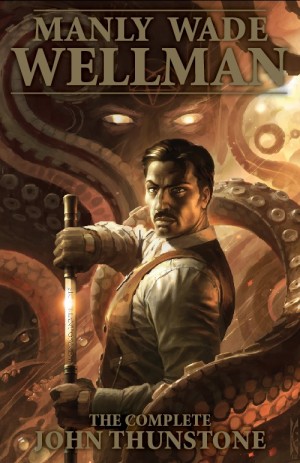
Hok the Mighty is AWESOME. I love Wellman's style. While he was not an academic, he was a great regional historian, and has an eye for incredible detail. The world of Hok, while fantastic, benefits from Wellman's historical eye, and it is very well researched and presented. I especially love how Wellman is retconning popular myths and legends.
 Posting Permissions
 forum
forum

 Reply With Quote